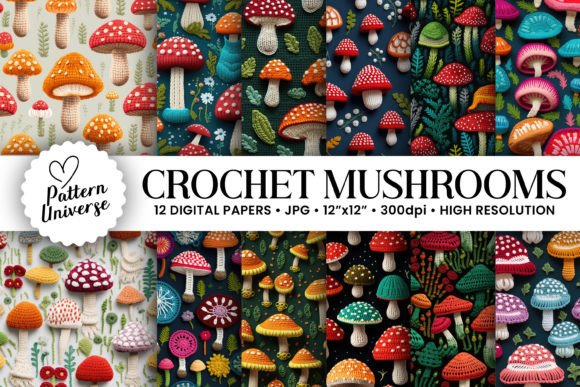
Crochet Mushroom Embroidery Backgrounds Review
As an embroidery designer who has spent countless weekends behind a craft fair table, I know that the difference between a browser and a buyer often comes down to visual impact. When I first encountered Crochet Mushroom Embroidery Backgrounds, my immediate reaction was one of pleasant surprise at the texture simulation. This collection does not just offer standard flat graphics; it provides a unique aesthetic that bridges the gap between digital precision and handmade warmth. For those of us running small shops or Etsy stores, finding assets that feel authentic yet are easy to implement is crucial.
First Impressions: Texture Meets Trend
The mushroom trend has been dominant in home decor and fashion for several seasons, but it often risks looking generic. What sets these Patterns apart is the "crochet" effect. The design mimics the looped, tactile nature of yarn work, giving it a cozy, farmhouse-meets-modern vibe. It feels soft, decorative, and inherently premium. When reviewing these Graphics, I noticed they strike a balance between bold enough to catch the eye from three feet away and detailed enough to invite closer inspection. This dual appeal is vital for a craft fair product where customers scan tables quickly.
The color palettes implied by the crochet style suggest earthy tones, creams, and muted pastels, which align perfectly with current consumer preferences for calming, natural aesthetics. Whether you are aiming for a rustic look or a clean, minimal modern style, these backgrounds provide a versatile foundation.
Product Application and Versatility
The true test of any machine embroidery design or digital asset is its adaptability. I evaluated how Crochet Mushroom Embroidery Backgrounds would perform across various handmade products. Here is where this collection shines:
- Tote Bag Design: The repeating nature of the background works exceptionally well on canvas totes. It creates an all-over print effect that looks high-end without requiring complex, time-consuming stitching if used as a printed sublimation transfer or a large-scale embroidered panel.
- Apron Embroidery: For kitchen wear, the whimsical yet structured look adds character. It transforms a plain linen apron into a statement piece.
- Tea Towel Embroidery: While dense backgrounds can be tricky on terry cloth, using this as a border or a central focal point on a smooth flour sack towel yields beautiful results.
- Embroidered Patch: Isolating individual mushroom elements from the background allows for cute, stackable patches that sell well as impulse buys.
- Pillow Covers and Market Bags: The organic shapes complement natural fabrics like cotton and hemp, enhancing the perceived value of the finished product.
Beyond physical goods, these assets are invaluable for Etsy seller marketing. They serve as excellent printable mockup elements for listing photos, helping digital sellers showcase their other designs in a cohesive, themed environment. The inclusion of 12 different variations means you can maintain brand consistency while keeping your shop fresh.
Production Practicality for Craft Fairs
When preparing for a weekend market, efficiency is key. A design must be repeatable for batch production. Crochet Mushroom Embroidery Backgrounds offers a significant advantage here. Because the design mimics a textured pattern, minor imperfections in stitch alignment are less noticeable than they would be in geometric or lettering-based designs. This forgiveness factor is a lifesaver when you are hooping dozens of items.
However, practical judgment is required. If you are using this as a full embroidery file for machine embroidery, consider the stitch density. A full background fill can use a lot of thread and time. I recommend testing the design on scrap fabric first. Check if the density causes puckering, especially on lighter fabrics. Using the right stabilizer is non-negotiable; a cut-away stabilizer is often best for wearable items to ensure longevity after washing.
Visual Appeal and Customer Attention
In a crowded booth, your display needs to stop traffic. Items featuring Crochet Mushroom Embroidery Backgrounds have a distinct visual texture that photographs beautifully. The interplay of light and shadow in the "crochet" loops adds depth, making the item look more expensive than it might have cost to produce. This perceived value drives buyer engagement. Customers often associate intricate textures with high-quality craftsmanship, even if the design is digitally generated.
Careful-Use Notes and Technical Considerations
While these designs are versatile, there are constraints to keep in mind to ensure professional results:
- Fabric Texture: Avoid using highly textured towels or thick fleece as the base for detailed background fills. The fabric texture can interfere with the clarity of the smaller crochet-like details, causing them to get lost.
- Curved Surfaces: Be cautious when applying full backgrounds to curved surfaces like caps. The distortion can make the pattern look uneven. It is better to use a smaller, isolated element from the set for hats.
- Dark Fabric: If embroidering on dark fabric, ensure your thread colors have sufficient contrast. Light creams and whites pop against navy or black, but muted earth tones may disappear.
- Small Sizes: Designs that lose clarity at smaller sizes should be avoided for tiny accents. Always check the legibility of the "crochet" loops when scaled down for pockets or small pouches.
- Dense Stitch Areas: Monitor the needle heat and thread breakage if running large, dense fills. Adjust your machine speed if necessary.
Designer’s Checklist for Success
Before committing to a full production run, follow these steps to mitigate risk:
- Test on Scrap Fabric: Never skip this step. Verify the look and feel on the exact material you intend to sell.
- Check Thread Contrast: Ensure the thread stands out against the fabric color.
- Review Spacing: Confirm that the elements are spaced appropriately for your chosen hoop size.
- Inspect Stitch Density: Look for areas that are too dense and may cause puckering or stiffness.
- Create a Real Mockup: Photograph a sample item to see how it looks in natural light, which is how most customers will view it online or in person.
- Confirm Commercial Licensing: The product description mentions "12 Crochet Mushroom Embroidery Pattern Digital Papers," but it is vital to verify if these are intended for print-on-demand, sublimation, or direct machine embroidery. Check the specific license terms provided by the creator to ensure you are compliant for commercial embroidery sales.
In conclusion, Crochet Mushroom Embroidery Backgrounds is a strong contender for any small shop product line. It offers the aesthetic appeal of handmade crochet with the scalability of digital design assets. By understanding its strengths in texture and trendiness, and respecting its technical limitations regarding density and fabric choice, you can create standout items that resonate with customers and boost your sales at your next craft fair.